When Should My Baby Drop to Two Naps? —Signs They're Ready (and Signs They Aren't)

Published by Restored Nights Sleep Consulting
Read time: Approximately 8 minutes
⭐Quick Takeaways
✔ Most babies transition between 6–9 months
✔ Readiness matters more than age
✔ Expect an adjustment period
✔ Earlier bedtimes are often helpful
✔ Flexibility is normal during transitions
In this article
When babies drop to two naps
Signs your baby may be ready
Signs they may not be ready
How to make the transition
Sample schedule
FAQs
If your baby's sleep suddenly feels unpredictable, you might be wondering whether it's time to drop from three naps to two.
Maybe your baby has started fighting the third nap, bedtime is creeping later and later, or naps that used to come easily are suddenly a struggle. It's natural to wonder whether a schedule change is the answer.
The transition from three naps to two is one of the biggest sleep changes during the first year, and it can feel a little messy while your baby adjusts. The good news? A few challenging days don't necessarily mean you're doing anything wrong.
In this guide, we'll cover when the transition typically happens, signs your baby may be ready, signs they may need a little more time, and practical ways to make the change as smoothly as possible.
When Do Babies Usually Drop to Two Naps?
Most babies transition from three naps to two sometime between 6 and 9 months of age, with many settling into a two-nap schedule around 7 to 8 months.
That said, age is only one piece of the puzzle.
Some babies are ready a little earlier, while others continue benefiting from three naps for several more weeks. Rather than focusing on the calendar alone, it's more helpful to look at your baby's overall sleep patterns and whether they're consistently showing signs that their current schedule no longer fits their needs.
Signs Your Baby May Be Ready for Two Naps
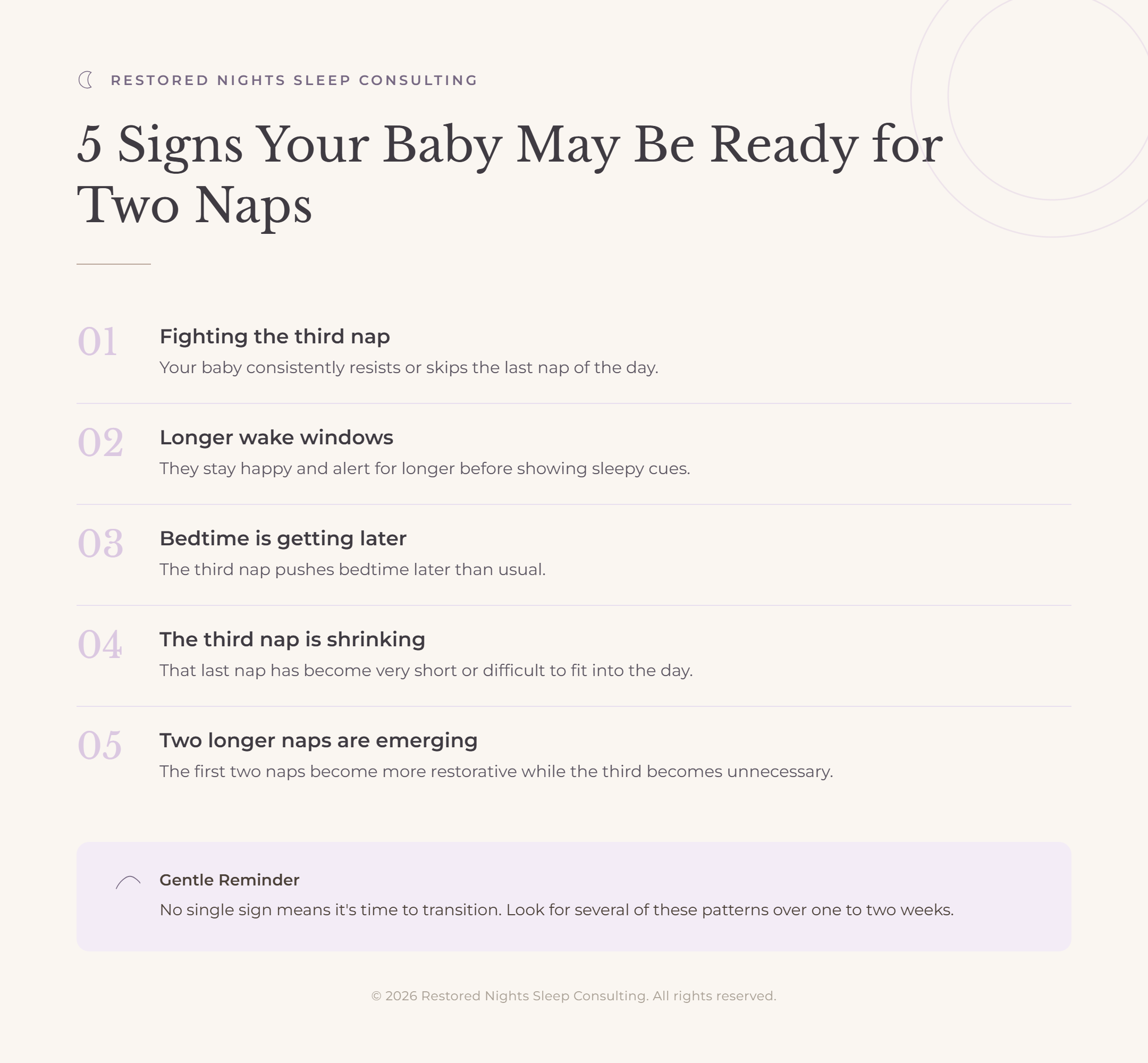
While every child is different, these are some of the most common signs that it may be time to begin the transition:
Your baby consistently fights the third nap.
If the third nap regularly takes 30–45 minutes to achieve (or doesn't happen at all), your baby's sleep needs may be changing.
Bedtime keeps getting pushed later.
A late afternoon nap often means bedtime doesn't happen until much later than usual, making evenings more difficult for everyone.
Wake windows are naturally getting longer.
If your baby is happily staying awake longer between naps without becoming overly fussy or overtired, they may be ready for a schedule adjustment.
Naps are becoming more predictable.
As babies mature, many begin taking two longer, more restorative naps instead of three shorter ones.
The third nap has become very short.
A quick 10–20 minute "catnap" that seems increasingly difficult to fit into the day can be another clue that it's becoming less necessary.
Signs It May Be Better to Wait a Little Longer
Just as important as recognizing readiness is knowing when it's best to wait.
Your baby may need a little more time if:
They're younger than about 6 months and still handling three naps well.
They become very fussy or overtired before bedtime without the third nap.
The third nap still happens easily most days.
Night sleep worsened significantly after trying a two-nap schedule.
They seem exhausted throughout the day after longer wake windows.
Remember that transitions don't have to happen on a specific birthday. Your baby's individual sleep needs matter more than the calendar.
How to Make the Transition Smoothly
The three-to-two nap transition is rarely an overnight change. Most babies benefit from a gradual approach.
Gradually extend wake windows.
Instead of making large changes all at once, slowly increase wake windows over several days or weeks while watching how your baby responds.
Expect a short adjustment period.
It's completely normal for sleep to feel a little inconsistent while your baby's body adapts to a new rhythm. One difficult day doesn't necessarily mean the transition isn't working.
Consider an earlier bedtime.
Without that third nap, many babies become tired earlier in the evening. A temporarily earlier bedtime can help prevent overtiredness during the transition.
Stay flexible.
Some days your baby may still need a third nap, especially during growth spurts, illness, travel, or after a particularly short nap day. That's okay. Flexibility doesn't undo healthy sleep habits.
Common Mistakes During the Three-to-Two Nap Transition
Stretching wake windows too quickly
Trying to keep your baby awake much longer than they're ready for often leads to overtiredness, making naps and bedtime more challenging.
Dropping the third nap too early
If your baby still truly needs that third nap, removing it prematurely can lead to increased night wakings and a very cranky evening.
Expecting immediate consistency
Sleep transitions take time. Some days will go more smoothly than others, and that's completely normal.
A Sample Two-Nap Schedule
Every baby is different, but a typical two-nap schedule might look something like this:
7:00 AM: Wake for the day
9:30/9:45 AM: Morning nap
2:00 PM: Afternoon nap
7:00: Bedtime
The exact timing will vary depending on your baby's age, wake windows, and nap lengths. Focus on following your baby's sleep cues while gradually working toward a consistent daily rhythm.
Frequently Asked Questions
What if my baby still needs a third nap sometimes?
That's completely normal. During the transition, some babies alternate between two and three naps depending on how the day unfolds. Rather than forcing one schedule every day, it's okay to adjust based on your baby's needs.
Will dropping to two naps improve night sleep?
For many babies, yes. Once they're developmentally ready, a two-nap schedule often helps create a more balanced day. However, if the transition happens too early, night sleep may temporarily become more disrupted.
How long does the transition usually take?
Many families notice things settling within one to three weeks, although every child is different. Some babies transition quickly, while others move back and forth between two and three naps for several weeks before fully settling into the new schedule.
Final Thoughts
Nap transitions are rarely perfectly linear.
Some days will go smoothly, while others may feel like you're taking a step backward. That's a normal part of your baby's development—not a sign that you've failed or need to start over.
Instead of focusing on one difficult nap or one challenging bedtime, look for patterns over the course of a week or two. Most babies settle into their new rhythm with a little time, consistency, and flexibility.
Still feeling unsure?
Nap transitions can be confusing, and you're not alone if you've found yourself second-guessing your baby's schedule.
I've put together a free guide covering five of the most common sleep mistakes I see—and simple strategies that can help.
Need personalized support?
Every child is different.
If you're feeling stuck or wondering whether your child's sleep schedule is on track, I'd love to help.
🌙 Lauren's Gentle Reminder
Sleep isn't about getting every day exactly right. Children thrive with loving, responsive care and consistent routines over time—not perfection.

About Lauren
Lauren Drukenbrod is a Certified Pediatric Sleep Consultant, Newborn Sleep Specialist, and Certified Potty Training Consultant. Through Restored Nights Sleep Consulting, she helps families build healthy sleep habits with practical, personalized, evidence-based support.
📍Franklin, Tennessee
🌙 Virtual consultations nationwide